

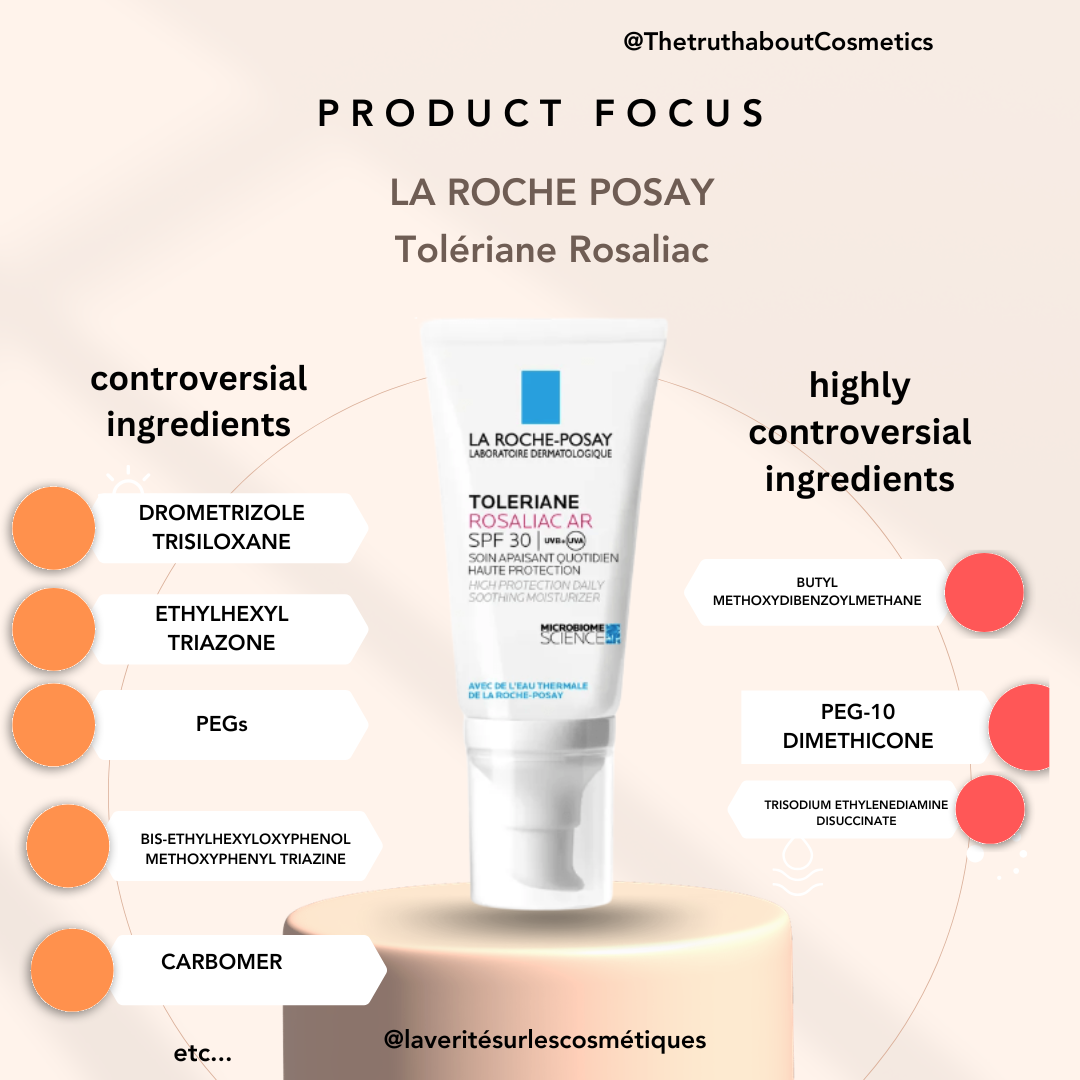
La Roche-Posay Toleriane Rosaliac AR: Why This « Sensitive Skin » Moisturizer Contains Controversial Filter
When dealing with redness, tightness, or allergic reactions, consumers with sensitive skin are frequently directed toward pharmacy counters, where La Roche-Posay is often presented as the ultimate solution. But does the brand’s dermatological marketing align with its chemical formulation? To answer this, we conducted a detailed La Roche-Posay Toleriane Rosaliac AR ingredients analysis.
While the #FrenchPharmacy trend continues to dominate social media, popularity should not overshadow safety. This article dissects the specific INCI list of the Toleriane Rosaliac AR SPF30 to reveal whether its « soothing » claims hold up against the presence of controversial synthetic UV filters, pollutants and potential endocrine disruptors.
Product Claims vs. Formulation
Brand Promise: A soothing daily moisturizer offering optimal anti-redness efficacy and SPF30 protection.
Reseller Description: Highlights « Rosaliac AR Concentrate » (ambophenol, neurosensine) and thermal spa water to soothe and hydrate. While these active ingredients sound promising, they are delivered in a vehicle loaded with synthetic compounds that contradict the needs of fragile skin barriers.
La Roche-Posay Toleriane Rosaliac AR ingredients analysis
INCI List
AQUA / WATER / EAU • DROMETRIZOLE TRISILOXANE • ALCOHOL DENAT. • ISOPROPYL MYRISTATE • ETHYLHEXYL TRIAZONE • ISONONYL ISONONANOATE • PROPYLENE GLYCOL DICAPRYLATE/DICAPRATE • GLYCERIN • PROPANEDIOL • ISOPROPYL LAUROYL SARCOSINATE • BIS-ETHYLHEXYLOXYPHENOL METHOXYPHENYL TRIAZINE • DIISOPROPYL SEBACATE • BUTYL METHOXYDIBENZOYLMETHANE • CETEARYL ALCOHOL • ZEA MAYS STARCH / CORN STARCH • SILICA • ACRYLATES/C10-30 ALKYL ACRYLATE CROSSPOLYMER • AMMONIUM ACRYLOYLDIMETHYLTAURATE/VP COPOLYMER • CAPRYLYL GLYCOL • CARBOMER • CETEARYL GLUCOSIDE • HYDROXYACETOPHENONE • INULIN LAURYL CARBAMATE • PEG-10 DIMETHICONE • PEG-20 • POTASSIUM HYDROXIDE • SODIUM STEAROYL GLUTAMATE • SPHINGOMONAS FERMENT EXTRACT • T-BUTYL ALCOHOL • TOCOPHEROL • TRISODIUM ETHYLENEDIAMINE DISUCCINATE.
The Problematic First 10 Ingredients
In cosmetic analysis, the first 8-10 ingredients define the product’s core profile. Immediately after water, this moisturizer introduces a cocktail of synthetic filters and solvents:
- Drometrizole Trisiloxane : A chemical UV filter and silicone.
- Ethylhexyl Triazone & Bis-Ethylhexyloxyphenol Methoxyphenyl Triazine: Synthetic UV filters with debated environmental impacts.
- Butyl Methoxydibenzoylmethane (Avobenzone): A widely used filter suspected of being an endocrine disruptor, potentially interfering with the hormonal system.
- PEG-10 Dimethicone & PEG-20: Ethoxylated compounds derived from toxic gases. They increase skin permeability (allowing other chemicals to penetrate deeper) and are poorly biodegradable pollutants.
- Acrylates/C10-30 Alkyl Acrylate Crosspolymer & Carbomer: Film-forming agents and stabilizers known as environmental pollutants (microplastics precursors).
The Verdict: A Formulation Far From Flawless
La Roche-Posay positions itself as the ally of sensitive skin, yet the Toleriane Rosaliac AR relies on highly controversial ingredients. La Roche-Posay Toleriane Rosaliac AR ingredients analysis reveals:
- Endocrine Disruptors : Suspected hormonal interference from specific UV filters.
- Barrier Disruptors: PEGs can weaken the very barrier sensitive skin needs to protect.
- Environmental Pollutants: Silicones and acrylates contribute to aquatic contamination.
For individuals with sensitive skin, the « cocktail effect » (cumulative exposure to low-dose toxins) is a critical concern. This product adds unnecessary chemical stress to both the user and the environment.
Conclusion: Is La Roche-Posay Safe for Sensitive Skin?
Sensitive skin requires a strengthened barrier, not a bombardment of synthetic filters and other problematic ingredients. While pharmacy brands like La Roche-Posay dominate the market, their formulations often lag behind safety standards regarding endocrine disruptors and environmental impact.
The Better Choice:
Certified natural and organic cosmetics offer a safer alternative. Brands like BIOTURM (Germany) for example formulate specifically for reactive skin using soothing, natural active ingredients without controversial UV filters, PEGs, or silicones.
When choosing a moisturizer:
1. Check the INCI list: Have a closer look at the first 10 ingredients, the bulk can already contain problematic ingredients.
2. Look for Certifications : Reliable organic labels guarantee the absence of endocrine disruptors and petrochemical derivatives.
If you want to dive deeper into the subject; check out our online course. Choosing Beauty Products: Ingredient Insights.

Frequently Asked Questions:
La Roche-Posay Toleriane Rosaliac AR Ingredients
What are the main controversial ingredients in La Roche-Posay Toleriane Rosaliac AR?
The formula contains several chemical UV filters (Drometrizole Trisiloxane, Avobenzone) suspected of being endocrine disruptors. It also other problematic ingredients like PEGs (polyethylene glycols), which are environmental pollutants and can increase skin permeability to other toxins.
Is La Roche-Posay Toleriane Rosaliac AR safe for sensitive skin?
While marketed for sensitive skin, the presence of problematic ingredients and potential endocrine disruptors makes it a risky choice for compromised skin barriers. True sensitive skin care should avoid ingredients that weaken the epidermis or introduce hormonal disruptors.
Does La Roche-Posay Toleriane Rosaliac AR contain endocrine disruptors?
Yes, the formulation includes Butyl Methoxydibenzoylmethane (Avobenzone) and other chemical filters that are flagged by toxicological studies as suspected endocrine disruptors. Their safety remains controversial due to the « cocktail effect » of daily exposure.
Are the ingredients in La Roche-Posay moisturizers environmentally friendly?
No. The product contains silicones, acrylates, and PEGs which are poorly biodegradable. These substances persist in the environment, contributing to water pollution and affecting aquatic ecosystems.
What is a safer alternative to La Roche-Posay for redness-prone skin?
Certified organic brands like for example BIOTURM ,Phyt’s, Patyka offer moisturizers specifically designed for redness-prone skin. These alternatives use natural soothing agents without synthetic UV filters, alcohol, or petrochemical derivatives, ensuring safety for both the skin and the environment.